Air Chilled Chicken vs Water Chilled Chicken Which Is Better for Flavor Safety and Sustainability

The chicken you buy at the grocery store has almost always been chilled before it reaches the meat case. That sounds like a small processing detail, but it can change how the chicken tastes, how it cooks, how much water it carries, and how much water the processor uses behind the scenes.
The two main methods are air chilling and water chilling. Both are designed to cool poultry quickly after processing, which helps slow bacterial growth and keep the meat safe. The difference is simple: one uses cold air, the other uses cold water. The effects are more interesting.
If you have ever cooked chicken that released a lot of liquid in the pan, struggled to brown, or tasted a little bland, the chilling method may have played a role. Here is how air chilled chicken vs water chilled chicken compares for flavor, texture, safety, sustainability, and everyday shopping decisions.

How air chilling and water chilling work
After poultry is processed, it must be cooled quickly. Warm meat creates conditions where bacteria can multiply, so chilling is a food safety step, not just a convenience.
The two methods reach the same basic goal in different ways.
Water chilling cools chicken in cold water
Water-chilled chicken is immersed in a large cold-water bath, often with antimicrobial treatments (i.e. chlorine, peroxyacetic acid, hydrogen peroxide, acifified sodium chlorite, peracetic acid, and lactic acid) approved for poultry processing. The water is kept cold and circulated so the chicken cools efficiently.
There is no specific numeric limit imposed by the USDA on the number of chickens that can be processed in a shared water bath before the water must be changed.
This method is common in the United States because it is fast and practical for high-volume poultry plants. Cold water transfers heat quickly, so it can bring the temperature of the bird down in less time than air alone.
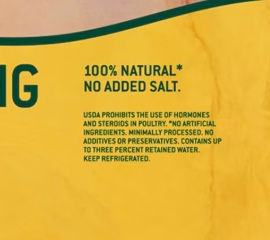
During this process, chicken can absorb water (and the chemicals in it). Federal rules require labels to state retained water when it is present because of processing. That is why some packages include wording such as “contains up to X% retained water” or similar language.
That retained water is not the same as intentional flavor brining. It is mostly process water (and chemicals), and it can affect cooking performance.

Air chilling cools chicken with cold air
Air-chilled chicken is cooled by moving cold air around the birds, often while they hang individually or pass through chilled rooms. Some systems use a combination of temperature control, airflow, and time to pull heat out of the meat.
Because the chicken is not submerged in a communal water bath, it typically absorbs little to no added water during chilling. Many air-chilled products advertise “no retained water,” though shoppers should still read the label.
Air chilling usually takes longer and can require more careful temperature and humidity control. That extra time and equipment can raise production costs, which is one reason air-chilled chicken often costs more at retail.
Feature | Air-chilled chicken | Water-chilled chicken |
Cooling method | Cold air circulates around the bird | Chicken is immersed in cold water with chemicals. |
Water absorption | Little to none | Can retain added water |
Typical flavor impact | More concentrated chicken flavor | Can taste milder if water is retained |
Texture | Often firmer and less watery | Can be softer or release more liquid |
Cost | Often higher | Often lower |
Availability | Growing, but less universal | Widely available |
How chilling affects flavor and texture
The biggest everyday difference shows up in the skillet, roasting pan, or grill.
Chicken contains natural moisture either way, but retained processing water can change how the meat behaves under heat. If a breast or thigh releases a lot of liquid during cooking, the surface may steam before it browns. That can make it harder to get crisp skin, golden edges, or a good sear.
Flavor is usually more concentrated with air-chilled chicken
Air-chilled chicken often tastes more “chickeny” because it has not taken on extra water during a bath. That does not mean every air-chilled bird is automatically delicious. Breed, feed, freshness, handling, and cooking skill all matter.
Still, less water in the meat usually means less dilution. When roasted, sautéed, or grilled, air-chilled chicken can deliver a cleaner, richer flavor. This is especially noticeable in simple recipes where the chicken is the main attraction, such as:
Roast chicken with salt, pepper, and herbs
Pan-seared chicken thighs
Grilled chicken with a light marinade
Chicken soup where the broth depends on the meat’s natural flavor
Water-chilled chicken can still taste good, especially when seasoned well or used in saucy dishes. If a recipe includes a strong marinade, curry, stew, casserole, or barbecue sauce, the flavor difference may be less obvious.
Air-chilled chicken often has a firmer texture. It tends to shed less liquid in the package and in the pan. Skin-on cuts may also crisp better because the surface is drier.
Water-chilled chicken may feel softer or wetter, especially if it has retained a higher amount of water. That moisture can be a drawback when browning, but it is not always a dealbreaker. For slow-cooked dishes or shredded chicken, the difference may matter less.


What the chilling method means for safety
Both air-chilled and water-chilled chicken can be safe. Both can also carry harmful bacteria if mishandled. The chilling method matters, but it does not replace good food safety habits at home.
In poultry processing, chilling helps limit bacterial growth by quickly lowering the temperature of the meat. Processors must meet food safety rules, monitor temperatures, and use controls that reduce contamination risk.
Water chilling has shared-water concerns, but it is regulated
The common concern with water chilling is cross-contamination. Since many birds may pass through a cold-water system, bacteria from one bird could move through the water.
That does not mean water-chilled chicken is unsafe. Processors use antimicrobial treatments (i.e. chemicals), water management, temperature controls, and other safety steps to reduce risk. Commercial poultry plants operate under inspection and food safety rules.
Still, the shared-water aspect is one reason some shoppers prefer air-chilled chicken.
Air chilling reduces water contact
Air chilling avoids immersion in a shared bath. That can reduce the chance of bacteria spreading through process water. It also means the chicken is not picking up water from that bath.
Some people see this as a safety advantage, and it can be a valid reason to choose air-chilled products. Still, air-chilled chicken is raw poultry. It needs the same careful handling as any other raw chicken.
Use these habits no matter which type you buy:
Keep raw chicken cold until cooking.
Store it on the lowest refrigerator shelf to prevent drips.
Use a separate cutting board for raw poultry.
Wash hands, utensils, and surfaces after contact.
Cook chicken to an internal temperature of 165°F, measured with a food thermometer.
Do not rinse raw chicken in the sink. Rinsing can splash bacteria around the kitchen and does not make the meat safer.
Environmental impact and health considerations
The sustainability question is not as simple as “air good, water bad.” Each method has tradeoffs.
Water chilling uses more water and creates more wastewater
Water chilling requires large volumes of cold water. It also creates wastewater that must be treated. In regions where water scarcity is a concern, that matters.
The method is efficient at cooling because water transfers heat well, but the water footprint is one of its main environmental drawbacks. Managing, chilling, disinfecting, and disposing of process water all require resources.
Air chilling saves water but uses energy
Air chilling uses far less water during the chilling step. That is a clear advantage, especially in areas where water conservation matters.
The tradeoff is energy. Air-chilling systems rely on refrigeration, fans, airflow control, and longer chilling time. The environmental impact depends partly on how the facility gets its electricity and how efficient its equipment is.
Health benefits are mostly about less retained water, not magic nutrition
Air-chilled chicken is often marketed as healthier. The possible health-related benefits come from what air-chilled chicken usually has less of:
Less retained processing water that has high concentration of chemicals
Less dilution of natural flavor
Less need to compensate with heavy seasoning or salty sauces
No immersion in a communal chlorinated water bath
That said, air-chilled chicken is not automatically lower in sodium unless the label confirms it has not been enhanced, brined, or seasoned. Some chicken, whether air-chilled or water-chilled, may be injected or marinated with a salt solution. Always check the ingredient list and nutrition label. At Chem Free Life, LLC we do not inject or marinate our poultry before freezing.
For shoppers watching sodium, the most useful label clues are “no added solution,” “no retained water,” and a simple ingredient list that says only chicken.
How to choose the right chicken when shopping
The best choice depends on what you are cooking, what you value, and what fits your budget. Air-chilled chicken often wins on flavor and texture, while water-chilled chicken often wins on price and availability.
Choose air-chilled chicken when flavor and browning matter
Air-chilled chicken is a strong choice for recipes where the chicken itself needs to shine.
Pick it for:
Roast chicken with crispy skin
Grilled chicken breasts or thighs
Pan-seared cutlets
Simple sheet-pan dinners
Homemade chicken stock or broth
Any dish where excess liquid would get in the way
It is also a good choice if water conservation matters to you or if you prefer chicken with little to no retained processing chemical treated water.
Choose water-chilled chicken when budget matters
Water-chilled chicken is usually easier to find and often costs less. For many recipes, especially dishes with sauces or long cooking times, the texture and flavor difference may be less noticeable.
Pick it for:
Soups and stews
Braised chicken dishes
Casseroles
Shredded chicken
Meal prep where seasoning or sauce is the main flavor
If you choose water-chilled chicken, pat it very dry before cooking. For better browning, let it sit uncovered in the refrigerator for a short time after salting, then blot away surface moisture before it hits the pan.
Read the label before you decide
Do not rely only on front-of-package claims. Turn the package over and look for the details that actually matter.
Look for:
Air chilled
This tells you the chilling method.
Retained water statement
Water-chilled poultry may list how much water remains from processing.
Enhanced or contains solution
This means the chicken has been treated with a solution, often involving salt or flavorings.
Ingredient list
Plain chicken should have a short ingredient list.
Sell-by or use-by date
Choose the freshest package available and cook or freeze it promptly.
Package liquid
Some liquid is normal, but excessive pooling can suggest a wetter product.
Match the cut to the method
The chilling method matters most when surface dryness and flavor concentration matter.
For skin-on chicken, air chilling can make a real difference because dry skin crisps better. For boneless, skinless breasts, it can help with browning and texture. For wings, air-chilled versions often cook up nicely because the skin starts drier.
For slow cooker chicken, heavily sauced dishes, or budget batch cooking, water-chilled chicken may be perfectly fine.

The better choice depends on what matters most
Either way, the label tells the story. Look for chilling method, retained water, added solutions, freshness, and safe handling instructions. Then cook it well, season it thoughtfully, and use a thermometer. That matters more than any marketing claim on the package.


Comments